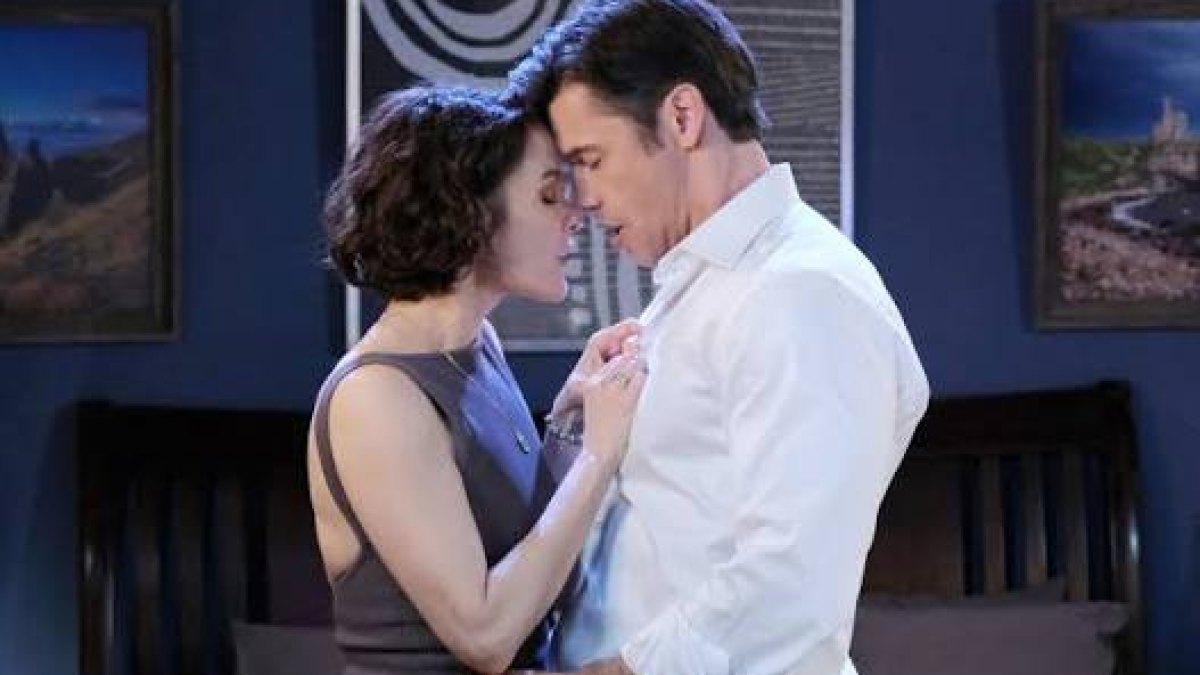
A salem blackout sits at the centre of the published Days of our Lives teasers for the final week of September 2026. Weekly spoiler grids indicate the power fails across the city, Marlena Evans is left in physical danger, and characters who have been avoiding each other end up trapped in the same rooms.
That last detail is the whole point. The blackout is not really about electricity. It is a scheduling device, and once you understand how it works you can predict roughly half of what follows.
What the Salem blackout teasers actually confirm
Published weekly spoilers for the period point to a citywide power failure, a health crisis for Marlena, and several characters confined together during the outage. Outlets including Soaps.com have run the week in that shape.
What no synopsis confirms is the cause. Published teasers have been explicit that the reason for the outage is not stated in advance, which is unusual and almost certainly deliberate.
Also unconfirmed: who survives, which relationships change, and whether the blackout connects to any existing storyline. Predictions circulating on video channels are speculation, and several contradict each other.
Confirmed against speculation
| Detail | Status |
|---|---|
| A citywide power failure hits Salem | In published weekly teasers |
| Marlena is placed in danger during the outage | In published weekly teasers |
| Characters are confined together | In published weekly teasers |
| The cause of the blackout | Not stated in any synopsis |
| A named character dies | Speculation only |
| A reunion or breakup results | Speculation only |
Why the disaster episode exists
Every long-running soap uses this device. Storms, fires, earthquakes, quarantines, sieges and outages all do the same structural job.
The problem they solve is a practical one. A soap canvas holds thirty or more active characters split across families who have good reasons to avoid each other. Getting two of them into a room usually takes a week of plot mechanics.
A disaster removes that work instantly. Nobody needs a motive to be somewhere when the choice has been taken away. Writers get any pairing they want, immediately, without anyone acting out of character.
That is why the blackout traps Belle and EJ in an elevator rather than simply inconveniencing them. Confinement is the feature, not the consequence.
The four things a blackout buys a show
- Forced conversations. Characters say things in the dark they would never say in an office. Soaps have used darkness as a confession device for decades.
- Legitimate peril. Hospitals lose power, and a medical emergency during an outage raises stakes without requiring a villain.
- Cover for a reveal. Someone can be somewhere they should not be, seen or unseen, with the lighting doing the work.
- A hard reset. When the lights return, the canvas has been rearranged and the next three months of story have new starting positions.
Why Marlena is at the centre of it
This is the part that reveals the writers' intent, and no weekly column covers it.
Marlena Evans is the show's emotional anchor and one of its longest-serving characters. Putting the anchor in danger guarantees that every household in Salem has a reason to react, because almost everyone is connected to her by family, friendship or history.
A disaster is only as effective as the character at its centre. Threaten a peripheral figure and half the cast has no reason to care. Threaten Marlena and the entire canvas is activated in a single episode.
Our read is that the show is using the outage to pull scattered storylines back into one place before the autumn stretch. That is interpretation rather than a confirmed plan, and we label it as such.
How the streaming format changes the disaster episode
Days is the only one of the five American soaps that streams rather than broadcasts, and that changes the mechanics of an event week.
A broadcast soap builds a disaster across five days and relies on viewers returning each afternoon. Days drops weekday mornings on Peacock, and a meaningful share of the audience watches several episodes in one sitting.
That rewards a tighter, more serialised disaster. Cliffhangers designed for a twenty-four hour gap feel different when the next episode is already available. Our Peacock release schedule guide covers how the drop pattern works.
It also affects spoilers. Because episodes land in the morning, plot details circulate before many viewers have watched, which makes an event week harder to avoid than it would be on broadcast.
The history behind Salem disasters
Days has a long record of citywide events, and the show is unusually willing to go large. It has run sieges, epidemics and serial killer arcs that touched the entire cast.
The DiMera family is frequently the engine behind those events, which is worth remembering while the cause of this outage remains unstated. Our DiMera family explainer covers why they are the default suspect in any Salem catastrophe.
The show also has sixty years of continuity to draw on, which lets a disaster reactivate dormant history rather than simply creating chaos. Our retrospective on Days at sixty traces how that archive gets reused.
What to watch for as the outage plays out
Watch the pairings first. Who is trapped with whom is a deliberate choice, and it tells you which relationships the show intends to develop next.
Watch for anyone unaccounted for. A character nobody can locate during a blackout is being positioned, either as a suspect or as a victim.
Watch what is said and then denied afterwards. Confessions made in a crisis and retracted in daylight are a standard daytime engine, and they usually run for months.
Episodes stream weekdays on the official Peacock Days of our Lives page. We label every unconfirmed beat in the Days of our Lives section, and the wider spoilers hub carries the same treatment for all five shows.
A warning about event-week coverage
Disaster storylines produce the worst misinformation in the genre. Death claims, exit claims and return claims spike during an event week because they generate clicks.
None of those is confirmed unless it comes from a network statement, an official promo, or named trade reporting. A thumbnail is not a source, and in September 2026 there are a great many thumbnails.


💬 Comments (0)
Be the first to share your thoughts!