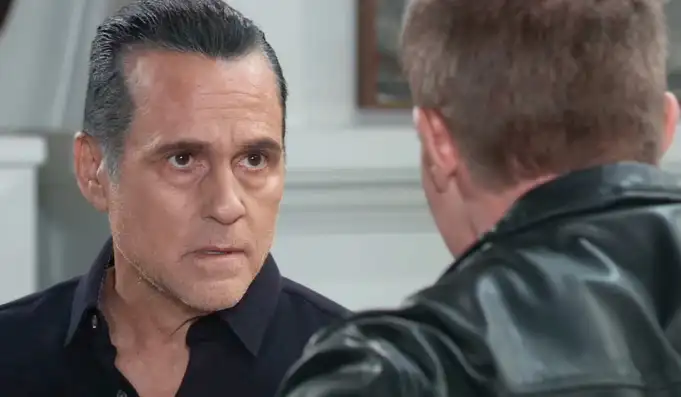
Sonny Corinthos, explained — the complete guide to General Hospital's mob kingpin: his 1993 debut, the bipolar disorder written into the character's core, the family and organization around him, and why Port Charles has orbited him for more than three decades.
The debut: August 13, 1993
Maurice Benard originated Michael "Sonny" Corinthos Jr. on August 13, 1993 — and the role made him a daytime institution, with multiple Daytime Emmy wins across a run now exceeding three decades (the character's documented history), (the ABC7 profile). The character's official description — a "manic depressive mob kingpin living in Port Charles" — is the key to everything: GH wrote mental illness into a power figure's core, and in doing so created the genre's most complex protagonist. Sonny is not a villain who suffers; he is a man whose illness and whose empire pressure each other every day the show airs.
The organization: how Port Charles is built around him
Sonny's business — the coffee-import front over the organized operations beneath it — gave GH its modern architecture: a criminal economy whose every relationship runs on trust. Around it, the show built the ensemble that defines the current canvas: Carly, his most consequential partner and the co-owner of his history; Jason, the loyalty constant whose every choice re-weights Sonny's world; and the children whose inheritances are the show's long game. The structure explains why trust stories are GH's modern signature: in Sonny's world, information is currency, betrayal is theft, and — as the current mole hunt shows — a single leak can reorganize an entire town.
The bipolar core: why the writing matters
The character's bipolar disorder is not a plot device; it is the show's longest-running medical storyline, treated with a seriousness daytime rarely attempted. The arcs where mania or depression take the wheel are where Benard's Emmy reel lives — and they are the reason a mob story plays as human drama. The writing choice ripples outward: Sonny's family manages his illness alongside his business, his enemies have historically targeted his medication rather than his muscle, and his moments of stability are the canvas's scarcest resource. In 2026, the arc to watch is the trust collapse: the mole in his organization is a direct attack on the one thing his condition makes most precious — certainty — and the fall's Sonny-vs-Drew war is the geopolitical consequence of that attack.
Why Port Charles orbits him in 2026
Three structural reasons. Duration: 30+ years of one performer in one role means every scene he plays carries the audience's entire viewing history — a resource no other current GH character can match at that scale. Architecture: the show's modern ensemble was built around his organization; removing Sonny would require rebuilding the canvas's power map, which is precisely the kind of multi-year project soaps only attempt at era boundaries. The genre's math: GH just crossed 2 million viewers with multi-month demographic highs in the 2026 ratings picture — numbers earned during a Sonny-centered season. The institution and the character are succeeding together, which is the strongest possible argument for continuity.



💬 Comments (0)
Be the first to share your thoughts!